When Does High Cholesterol Become Dangerous to Your Health?
Introduction
Cholesterol is a fatty substance the body needs to build cells and produce hormones, but levels above normal can threaten the health of the heart and arteries. The key question is not merely whether cholesterol is present, but when its elevation becomes dangerous and requires intervention.
Types of Cholesterol
Understanding the types helps assess the degree of risk accurately.
Main Types
- LDL (bad cholesterol): deposits in artery walls and causes blockage.
- HDL (good cholesterol): carries excess cholesterol away from the arteries.
- Triglycerides: another type of fat whose elevation is linked to heart disease.
Reference Values
The numbers give a picture of the risk level.
Approximate Levels
- Total cholesterol: desirable below 200 mg/dL.
- LDL: ideal below 100 mg/dL.
- HDL: preferably above 40 to 60 mg/dL.
- Triglycerides: normal below 150 mg/dL.
These values vary by lab and by each person's risk factors, and the doctor sets the appropriate targets for each case.
When Does the Elevation Become Dangerous?
Risk depends not on a single number but on the combination of factors.
Factors That Increase Risk
- Clearly high LDL combined with low HDL.
- The presence of diabetes or high blood pressure.
- Smoking, obesity, and physical inactivity.
- A family history of early heart disease.
Possible Complications
- Atherosclerosis and narrowing of the arteries.
- Angina and heart attacks.
- Stroke when brain arteries become blocked.
Prevention and Control
Risks can be lowered through practical steps.
Lifestyle Changes
- Following a diet low in saturated fat and rich in fiber.
- Exercising regularly to raise HDL.
- Quitting smoking and maintaining a healthy weight.
Medical Follow-Up
- Having a lipid panel done periodically.
- Adhering to prescribed medications such as statins when needed.
Conclusion
High cholesterol becomes dangerous when combined with other risk factors and left uncontrolled for a long time. Regular screening and early intervention are the keys to protecting the heart.
Book your complete lipid panel at RAIDX Laboratories and keep your heart healthy with accurate, reliable numbers.
Did you like the article?
Share it with your friends to spread the benefit
Packages You May Like
Discover medical packages related to this topic
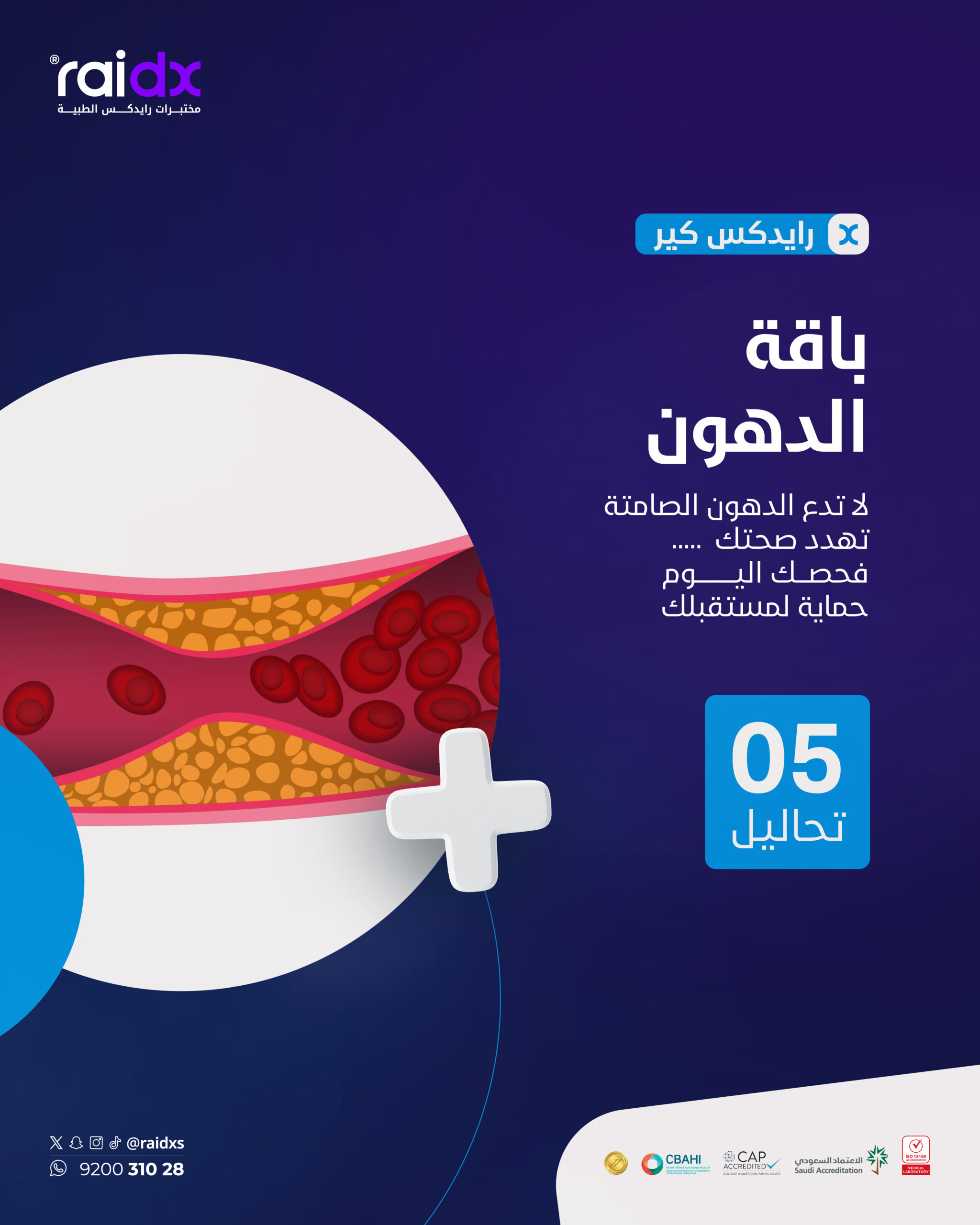
الدهون كير
باقة الدهون كير تُعد فحصًا متخصصًا يقيس مستويات الدهون في الدم بدقة، مثل الكوليسترول الكلي، الكوليسترول الضار (LDL)، الكوليسترول النافع (HDL)، الدهون الثلاثية، نسبة الكوليسترول الكلي إلى HDL، والبروتين الدهني منخفض الكثافة جدًا (VLDL). تهدف هذه الباقة إلى مراقبة الدهون بشكل استباقي، لتقليل مخاطر الأمراض القلبية والوعائية.

الشامل الذهبي
باقة متكاملة بـ 35 تحليلًا تغطي أهم وظائف الجسم، تمنحك تقييمًا شاملًا لصحتك بدقة واحترافية.
مقالات ذات صلة

أهمية الفحوصات الدورية للصحة العامة: دليلك الشامل للوقاية
اكتشف لماذا تعتبر الفحوصات الطبية الدورية حجر الأساس في الحفاظ على صحتك ومنع الأمراض قبل تفاقمها. دليل شامل يوضح أنواع الفحوصات المهمة وفوائدها.
اقرأ المزيد
كيف تفهم نتائج التحاليل الطبية: دليل مبسط
دليل شامل لمساعدتك على فهم نتائج التحاليل الطبية بشكل أفضل. تعلم كيفية قراءة الأرقام والمؤشرات المهمة في تقاريرك الطبية.
اقرأ المزيد