

Does Vitamin D Deficiency Cause Hair Loss? The Link and Solutions
Introduction
Hair loss is a distressing problem that drives many to search for its causes, and vitamin D deficiency is one of the proposed factors. Vitamin D plays an important role in the hair follicle growth cycle, as follicles have specific receptors for it. This article reviews the scientific relationship between vitamin D deficiency and hair loss and how to address it.
The Role of Vitamin D in Hair Health
Vitamin D goes beyond its role in bone to include hair growth and renewal.
Functions Related to Hair
- Contributing to the activation of new hair follicles.
- Supporting the natural hair growth cycle.
- Participating in cell and tissue renewal.
- A deficiency being linked to some hair loss conditions such as alopecia.
The Link Between Vitamin D Deficiency and Hair Loss
Some studies have pointed to a link between low vitamin D and certain types of hair loss.
What Research Indicates
- Lower vitamin D levels observed in some people with alopecia areata.
- Deficiency linked to temporary telogen hair shedding in some cases.
- The relationship is correlational and does not always mean deficiency is the sole cause.
- Hair loss remains multifactorial and needs a comprehensive assessment.
Reference Values for Testing
A vitamin D test helps determine whether deficiency is a contributing factor, noting that values vary between labs and require physician interpretation.
Approximate Levels
- Sufficient level: usually above 30 ng/mL.
- Deficiency: below 20 ng/mL.
- Iron, ferritin, and thyroid tests may also be requested to rule out other causes.
Other Causes of Hair Loss
It is important not to limit the cause to vitamin D alone.
Common Factors
- Iron deficiency or anemia.
- Thyroid disorders.
- Hormonal changes and psychological stress.
- Genetic factors and certain medications.
Prevention and Treatment
Treatment depends on addressing the underlying cause.
Practical Tips
- Doing tests before starting any supplement.
- Moderate sun exposure and eating food sources rich in vitamin D.
- Following a balanced diet that supports hair health.
- Not taking high-dose supplements except under a doctor's supervision.
Conclusion
Vitamin D deficiency may contribute to hair loss in some people, but it is not always the sole cause, and testing is the first step to identify the real factor. Treating the underlying cause under medical supervision is the best path to restoring hair health.
Book your vitamin D test and hair loss panel now at RAIDX laboratories for an accurate diagnosis and a clear plan.
Did you like the article?
Share it with your friends to spread the benefit
Packages You May Like
Discover medical packages related to this topic

باقة الفيتامينات و المعادن
باقة الفيتامينات والمعادن من رايدكس تُجري فحصًا شاملاً لمجموعة من الفيتامينات الأساسية مثل (A, C, D, E, B-complex) والمعادن لتحديد النقص أو الزيادة بدقة. لا تحتاج هذه الباقة إلى الصيام، لكنها تطلب التوقف عن تناول الفيتامينات والمكملات قبل الفحص لضمان دقة النتائج.
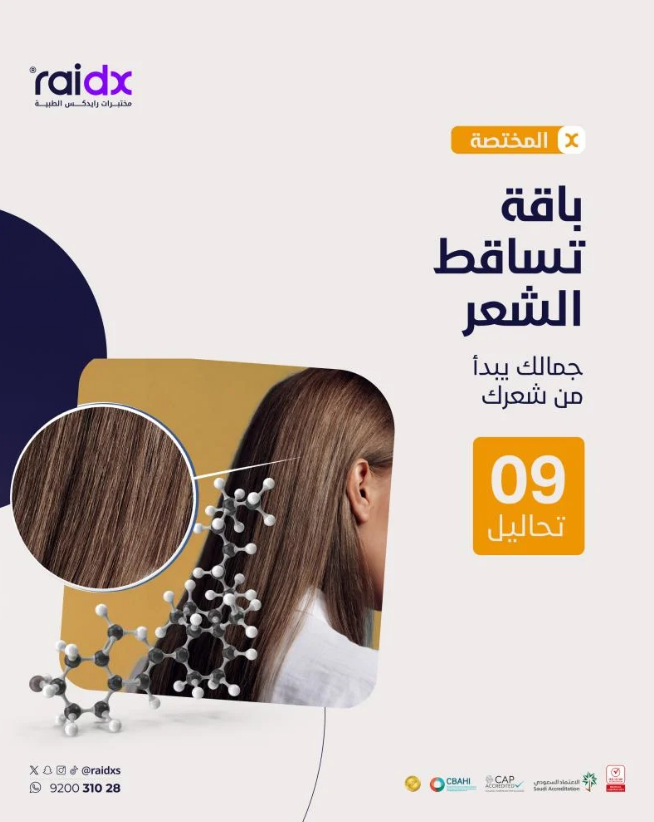
تساقط الشعر
باقة تساقط الشعر من رايدكس عبارة عن برنامج مختبري شامل يهدف إلى كشف الأسباب الداخلية وراء تساقط الشعر، التقصف، ضعف الأظافر، ومشاكل البشرة. تشمل تحاليل روتينية ومعتمدة لتحديد النقص الذي قد يؤدي لهذه المشكلات.
مقالات ذات صلة

أهمية الفحوصات الدورية للصحة العامة: دليلك الشامل للوقاية
اكتشف لماذا تعتبر الفحوصات الطبية الدورية حجر الأساس في الحفاظ على صحتك ومنع الأمراض قبل تفاقمها. دليل شامل يوضح أنواع الفحوصات المهمة وفوائدها.
اقرأ المزيد
كيف تفهم نتائج التحاليل الطبية: دليل مبسط
دليل شامل لمساعدتك على فهم نتائج التحاليل الطبية بشكل أفضل. تعلم كيفية قراءة الأرقام والمؤشرات المهمة في تقاريرك الطبية.
اقرأ المزيد