

When Do You Need a Vitamin D Test? And What Are the Symptoms of Deficiency?
Introduction
Vitamin D is nicknamed the sunshine vitamin because the body produces it upon sun exposure. Yet a large share of the region's population suffers from deficiency due to limited sun exposure and modern lifestyles. This article explains the importance of this vitamin, the symptoms of deficiency, and when testing becomes essential.
Why Is Vitamin D Important?
Vitamin D is not limited to bone health; it serves many vital functions:
- Enhancing the absorption of calcium and phosphorus to build strong bones.
- Supporting the immune system and resisting infection.
- Contributing to muscle and nerve health.
- Positively influencing mood and overall energy.
Symptoms of Vitamin D Deficiency
Symptoms are often nonspecific and develop slowly. The most prominent include:
- Chronic fatigue and exhaustion without a clear cause.
- Bone and joint pain and muscle weakness.
- Frequent colds and infections.
- Hair loss, mood swings, and seasonal depression.
- Slow wound healing and general weakness.
When Do You Need the Test?
Doctors recommend a vitamin D test in the following cases:
- Presence of the deficiency symptoms mentioned above.
- Limited sun exposure or wearing clothing that fully covers the body.
- Having osteoporosis or frequent fractures.
- Digestive disorders that impair absorption.
- Treatment follow-up for those who have started vitamin supplements.
How to Prepare for the Test
The vitamin D test is simple and needs no special preparation:
- No fasting required usually.
- A simple blood draw is sufficient.
- It is preferable to tell the lab about any vitamin D supplements you take.
Reading the Results and Normal Ranges
Vitamin D level is measured through the 25-hydroxy vitamin D test, and values are usually classified as:
- Severe deficiency: below 10 ng/mL.
- Deficiency: 10 to under 20 ng/mL.
- Sufficient level: approximately 20 to 50 ng/mL.
- High: above 50 ng/mL.
These values vary between laboratories and should be interpreted by a doctor, who determines the appropriate treatment dose when needed.
Tips to Raise Vitamin D Levels
- Moderate sun exposure in the morning for a few minutes daily.
- Eat foods rich in it such as fatty fish, eggs, and fortified dairy products.
- Take supplements as prescribed by your doctor without excess.
Frequently Asked Questions
Can deficiency be corrected by diet alone?
Often difficult, as most affected people need supplements under medical supervision.
Is excess vitamin D harmful?
Yes, supplement overdose can raise calcium and harm the kidneys.
How often should the test be repeated?
Usually after several months of treatment to monitor improvement.
Conclusion
Vitamin D deficiency is common but easy to detect and treat. Testing when symptoms appear or as part of routine checks helps protect your bones, immunity, and energy.
At RAIDX Laboratories, we offer the vitamin D test accurately and quickly. Book your test today and check your sunshine-vitamin level.
Did you like the article?
Share it with your friends to spread the benefit
Packages You May Like
Discover medical packages related to this topic
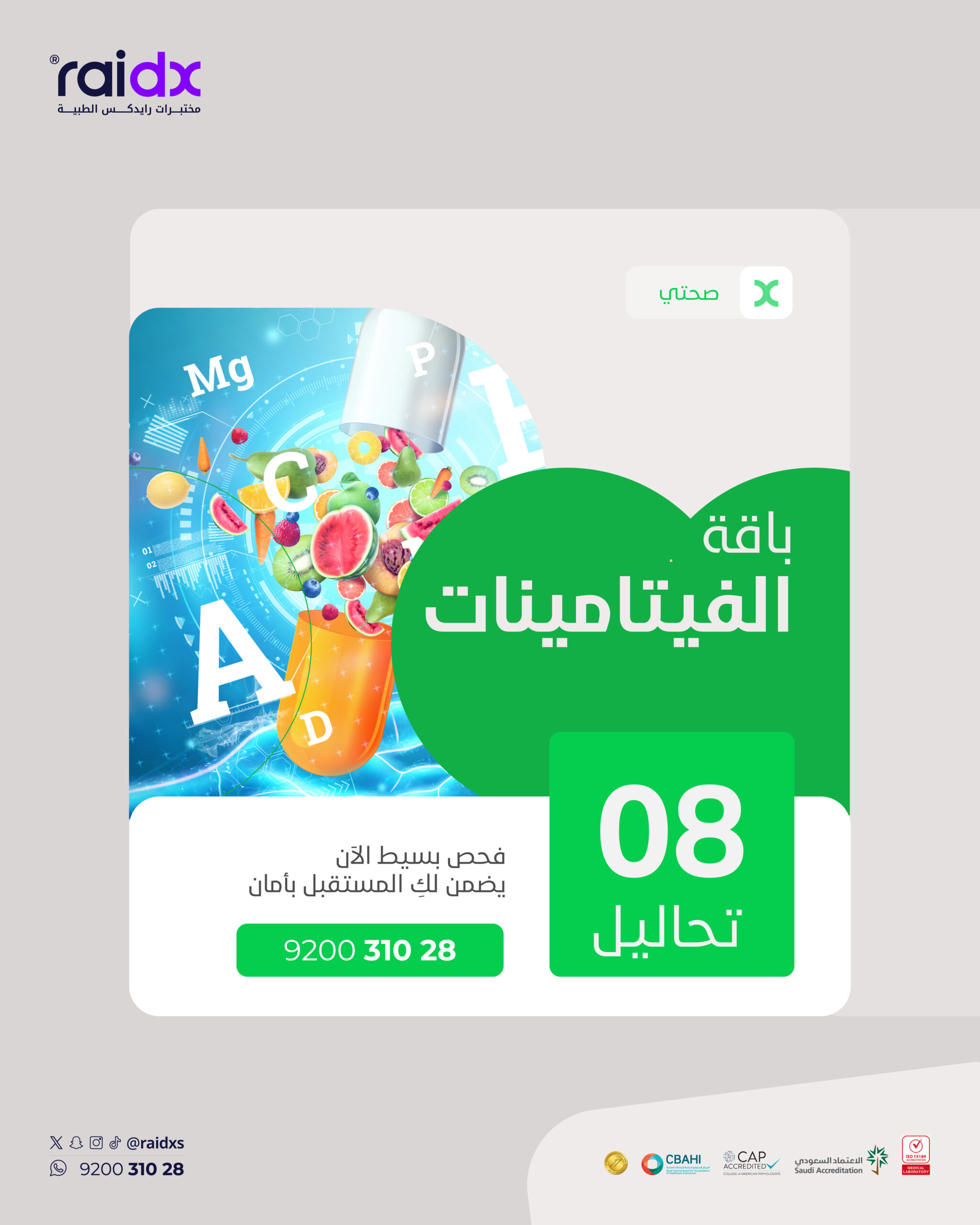
باقة الفيتامينات
باقة الفيتامينات والمعادن تقيّم مستويات الفيتامينات الأساسية (A, C, D, E, B12, B9, B6, B2) وتساعدك على معرفة النقص أو الزيادة لتصحيحها وتحسين صحتك العامة.
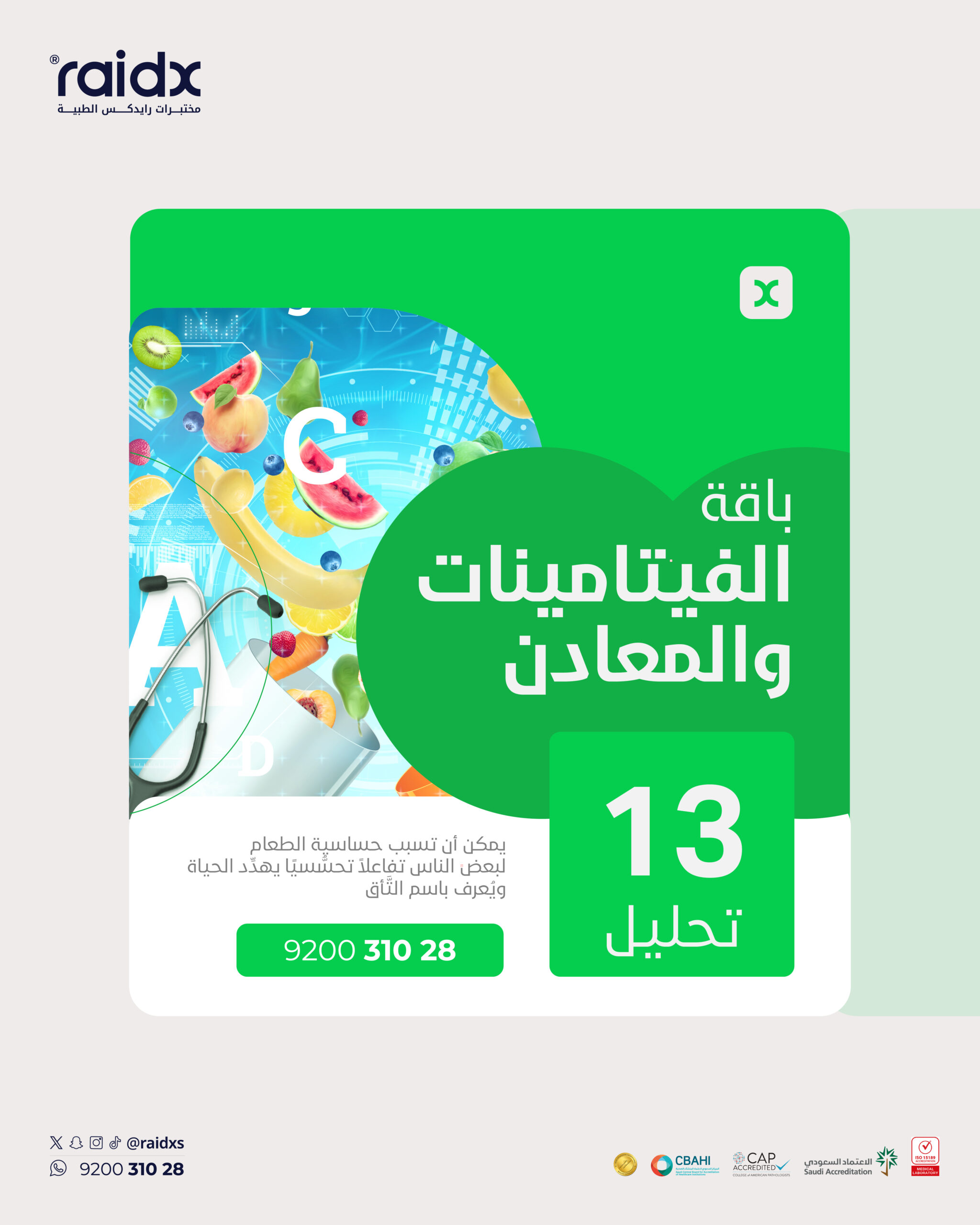
باقة الفيتامينات و المعادن
باقة الفيتامينات والمعادن من رايدكس تُجري فحصًا شاملاً لمجموعة من الفيتامينات الأساسية مثل (A, C, D, E, B-complex) والمعادن لتحديد النقص أو الزيادة بدقة. لا تحتاج هذه الباقة إلى الصيام، لكنها تطلب التوقف عن تناول الفيتامينات والمكملات قبل الفحص لضمان دقة النتائج.
مقالات ذات صلة

أهمية الفحوصات الدورية للصحة العامة: دليلك الشامل للوقاية
اكتشف لماذا تعتبر الفحوصات الطبية الدورية حجر الأساس في الحفاظ على صحتك ومنع الأمراض قبل تفاقمها. دليل شامل يوضح أنواع الفحوصات المهمة وفوائدها.
اقرأ المزيد
كيف تفهم نتائج التحاليل الطبية: دليل مبسط
دليل شامل لمساعدتك على فهم نتائج التحاليل الطبية بشكل أفضل. تعلم كيفية قراءة الأرقام والمؤشرات المهمة في تقاريرك الطبية.
اقرأ المزيد