

When Do You Need a Complete Cholesterol Test? Your Guide to Heart Health
Introduction
High cholesterol is one of the leading risk factors for heart and arterial diseases, and it is often silent with no symptoms. That is why the complete cholesterol test (or lipid profile) is a fundamental screening to assess your heart health and determine how much you need lifestyle changes or treatment.
What Is the Complete Cholesterol Test?
It is a blood test that measures the levels of different types of fats in the blood, providing a comprehensive picture of the risk of atherosclerosis. It is also called the lipid profile.
Components of the Test
- Total cholesterol: the sum of cholesterol in the blood.
- Bad cholesterol (LDL): deposits in arterial walls and causes blockages.
- Good cholesterol (HDL): carries excess cholesterol away from the arteries.
- Triglycerides: a type of fat linked to diet and weight.
When Do You Need the Test?
Indications and Risk Factors
- Reaching age 40 or having a family history of heart disease.
- Having diabetes or high blood pressure.
- Being overweight or obese and physically inactive.
- Smoking.
- Monitoring the effectiveness of cholesterol-lowering medications.
- Routine preventive screening even without symptoms.
Approximate Reference Values
Values vary between labs; common ranges include:
- Total cholesterol: preferably below 200 mg/dL.
- LDL (bad cholesterol): preferably below 100 mg/dL.
- HDL (good cholesterol): preferably above 40 mg/dL for men and 50 for women.
- Triglycerides: preferably below 150 mg/dL.
Your doctor sets the targets suitable for you based on your overall risk level.
How to Prepare for the Test
- Fasting for 9 to 12 hours may be requested in some cases.
- Drinking water is allowed during the fast.
- Avoid heavy meals the night before.
- Inform your doctor of medications used.
How to Read the Results
- Elevated LDL and total cholesterol increase the risk of atherosclerosis and clots.
- Low HDL reduces the heart's natural protection.
- The doctor evaluates the results together with other risk factors to set the treatment plan.
Tips for Lowering Bad Cholesterol
- Reduce saturated and trans fats and fried foods.
- Increase vegetables, fruits, and fiber.
- Exercise regularly and maintain a healthy weight.
- Quit smoking.
- Adhere to medications when prescribed by your doctor.
Frequently Asked Questions
Are slim people at risk of high cholesterol?
Yes, genetics and diet can raise cholesterol even in people of normal weight.
How often should I repeat the test?
Usually every 4 to 6 years for healthy people, and more frequently for those with risk factors or on treatment.
Conclusion
The complete cholesterol test is a simple yet impactful step in protecting your heart and detecting risk early. Because numbers alone are not enough, results must be interpreted by a qualified physician, keeping in mind that values vary between laboratories.
Book your complete cholesterol test now at RAIDX Laboratories and take a proactive step toward a healthier heart.
Did you like the article?
Share it with your friends to spread the benefit
Packages You May Like
Discover medical packages related to this topic
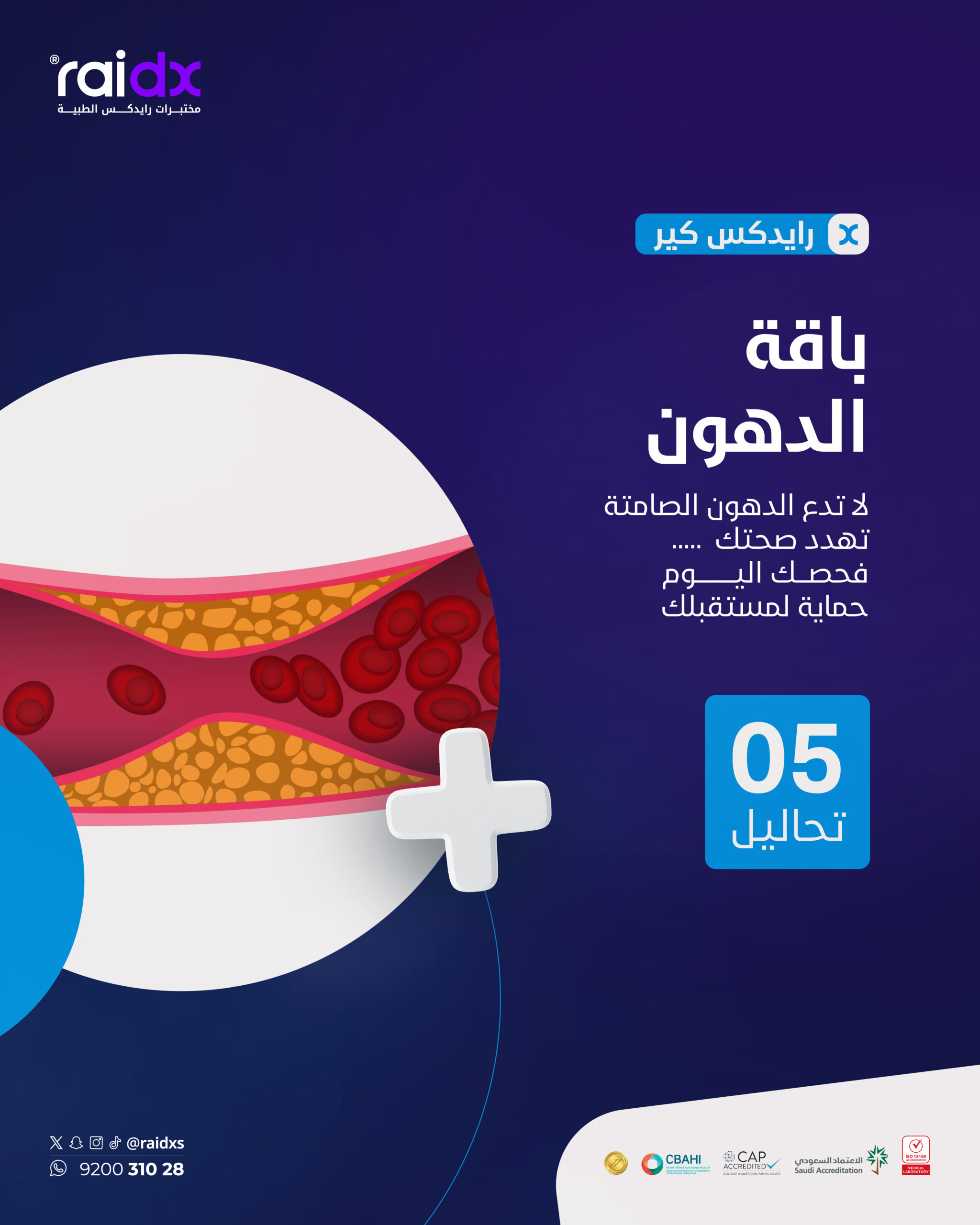
الدهون كير
باقة الدهون كير تُعد فحصًا متخصصًا يقيس مستويات الدهون في الدم بدقة، مثل الكوليسترول الكلي، الكوليسترول الضار (LDL)، الكوليسترول النافع (HDL)، الدهون الثلاثية، نسبة الكوليسترول الكلي إلى HDL، والبروتين الدهني منخفض الكثافة جدًا (VLDL). تهدف هذه الباقة إلى مراقبة الدهون بشكل استباقي، لتقليل مخاطر الأمراض القلبية والوعائية.

الشامل الذهبي
باقة متكاملة بـ 35 تحليلًا تغطي أهم وظائف الجسم، تمنحك تقييمًا شاملًا لصحتك بدقة واحترافية.
مقالات ذات صلة

أهمية الفحوصات الدورية للصحة العامة: دليلك الشامل للوقاية
اكتشف لماذا تعتبر الفحوصات الطبية الدورية حجر الأساس في الحفاظ على صحتك ومنع الأمراض قبل تفاقمها. دليل شامل يوضح أنواع الفحوصات المهمة وفوائدها.
اقرأ المزيد
كيف تفهم نتائج التحاليل الطبية: دليل مبسط
دليل شامل لمساعدتك على فهم نتائج التحاليل الطبية بشكل أفضل. تعلم كيفية قراءة الأرقام والمؤشرات المهمة في تقاريرك الطبية.
اقرأ المزيد