

Calcium Test: Why It Matters and How to Read the Results
Introduction
Calcium is the most abundant mineral in the body, central to the health of bones and teeth and to the function of nerves, muscles, and the heart. The calcium test measures its blood level to assess mineral balance and detect disorders of the glands, kidneys, and bones.
The Importance of Calcium in the Body
The body stores about 99% of calcium in the bones and teeth, while the remaining fraction in the blood carries out vital functions.
Key Functions of Calcium
- Building bones and teeth and maintaining their strength.
- Regulating muscle contraction, including the heart muscle.
- Transmitting nerve signals.
- Aiding blood clotting.
Types of Calcium Test
There is more than one form of the test:
Total Calcium and Ionized Calcium
- Total calcium: measures protein-bound and free calcium together.
- Ionized calcium: measures the active free portion, more accurate in certain critical cases.
Indications for the Test
A doctor may order the test for:
Common Symptoms and Conditions
- Muscle cramps or tingling in the limbs.
- Bone pain or recurrent fractures and osteoporosis.
- Parathyroid gland disorders.
- Chronic kidney disease.
- Monitoring certain medications or kidney stones.
Preparing for the Test and How It Is Done
It is performed with a simple blood draw.
Tips Before the Test
- The doctor may ask you to fast for a few hours.
- Mention calcium and vitamin D supplements and antacids.
Normal Ranges and Interpreting Results
Total calcium normally ranges between 8.5 and 10.5 mg/deciliter, while ionized calcium is roughly between 4.6 and 5.3 mg/deciliter.
High Calcium
May result from hyperparathyroidism, excess vitamin D, or some tumors.
Low Calcium
May relate to vitamin D deficiency, hypoparathyroidism, or kidney disease.
Reference values vary between laboratories, and results should be interpreted by a qualified physician with attention to albumin level.
How to Maintain a Healthy Level
- Eat calcium sources such as dairy and leafy greens.
- Get enough vitamin D to enhance absorption.
- Stay physically active to support bone health.
Conclusion
The calcium test is an essential check for bone health, mineral balance, and the early detection of important disorders. Book your calcium test now at RAIDX Laboratories for accurate results and trusted medical interpretation.
Did you like the article?
Share it with your friends to spread the benefit
Packages You May Like
Discover medical packages related to this topic
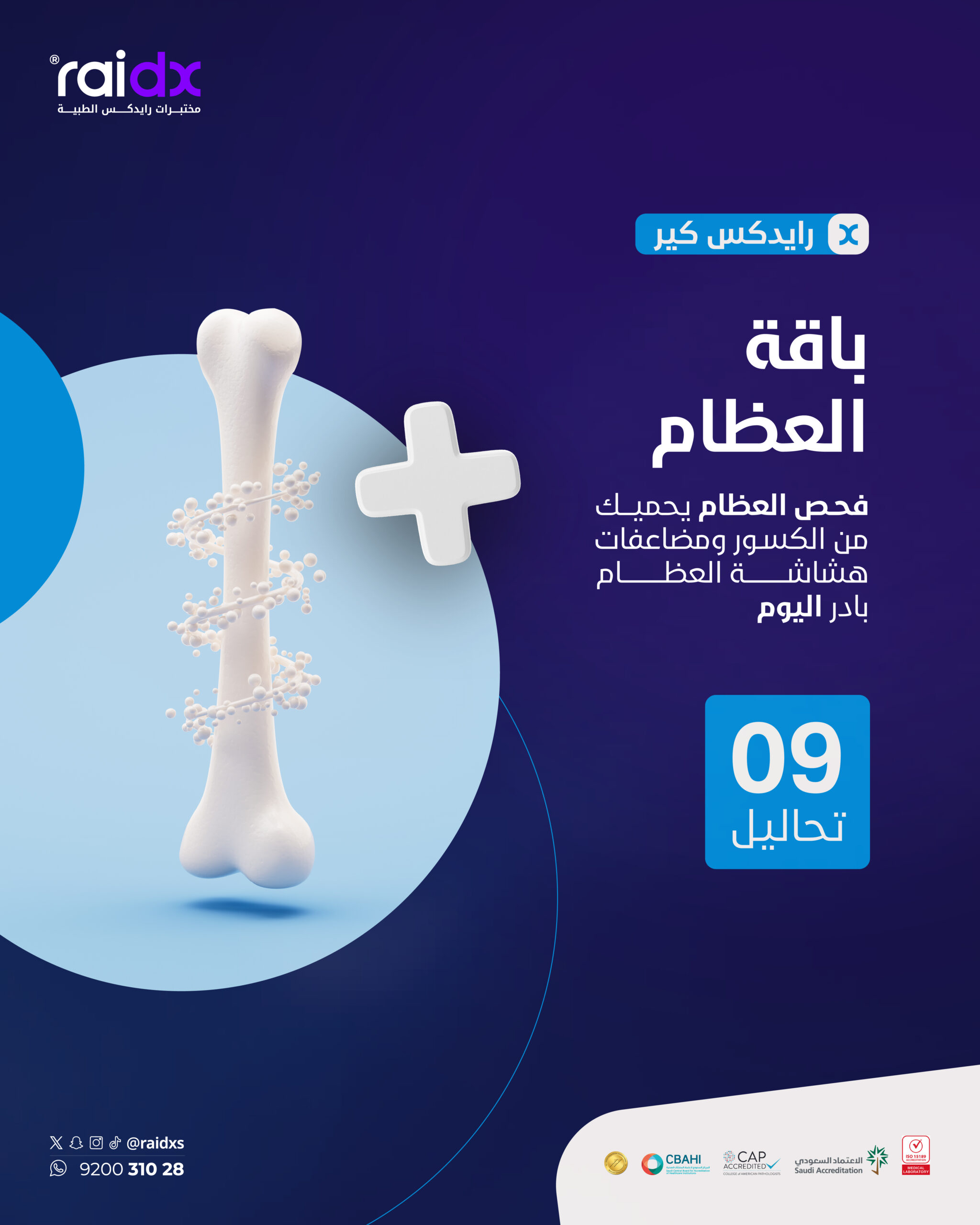
العظام كير
باقة فحوصات متكاملة لدعم صحة العظام والكشف المبكر عن أي خلل في التمثيل الغذائي للعظام.
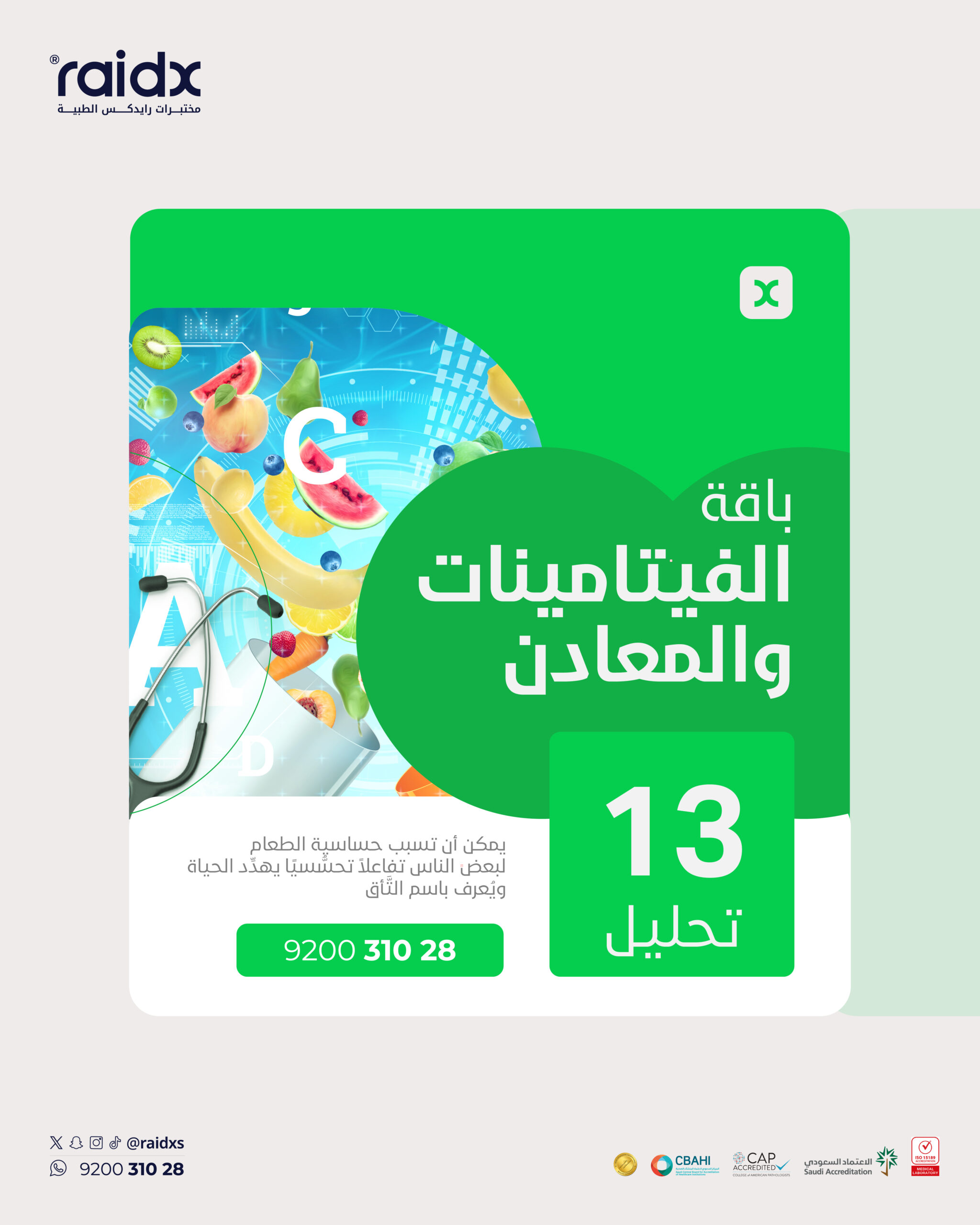
باقة الفيتامينات و المعادن
باقة الفيتامينات والمعادن من رايدكس تُجري فحصًا شاملاً لمجموعة من الفيتامينات الأساسية مثل (A, C, D, E, B-complex) والمعادن لتحديد النقص أو الزيادة بدقة. لا تحتاج هذه الباقة إلى الصيام، لكنها تطلب التوقف عن تناول الفيتامينات والمكملات قبل الفحص لضمان دقة النتائج.
مقالات ذات صلة

أهمية الفحوصات الدورية للصحة العامة: دليلك الشامل للوقاية
اكتشف لماذا تعتبر الفحوصات الطبية الدورية حجر الأساس في الحفاظ على صحتك ومنع الأمراض قبل تفاقمها. دليل شامل يوضح أنواع الفحوصات المهمة وفوائدها.
اقرأ المزيد
كيف تفهم نتائج التحاليل الطبية: دليل مبسط
دليل شامل لمساعدتك على فهم نتائج التحاليل الطبية بشكل أفضل. تعلم كيفية قراءة الأرقام والمؤشرات المهمة في تقاريرك الطبية.
اقرأ المزيد